Boat speed & wind-axis VMG
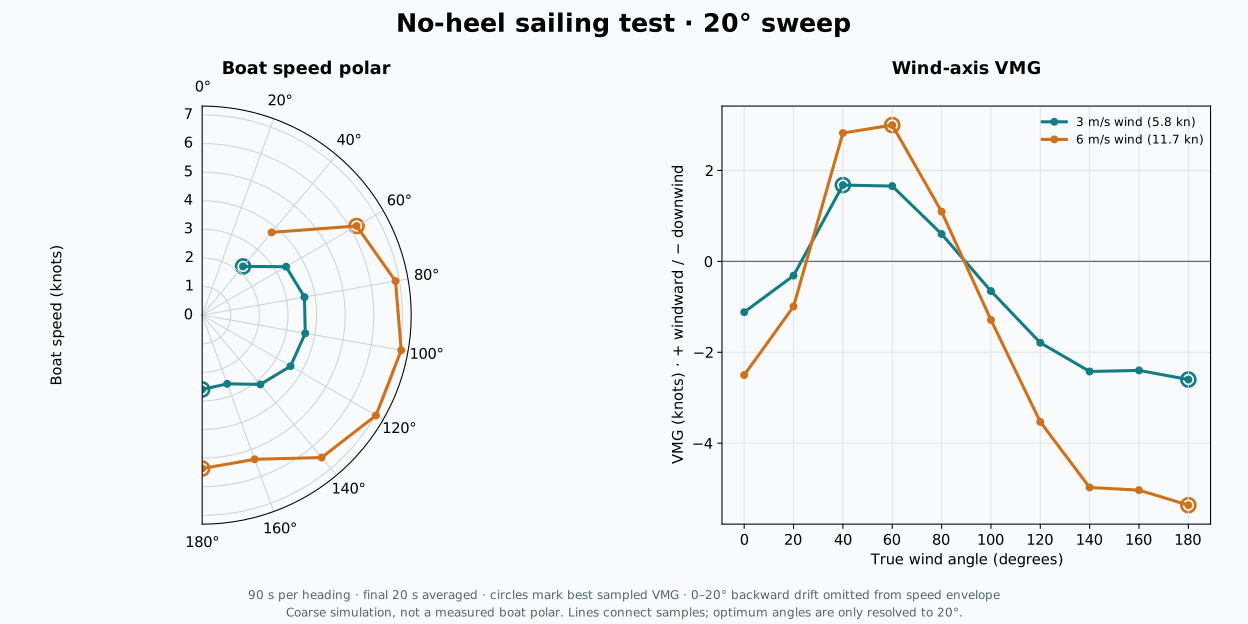
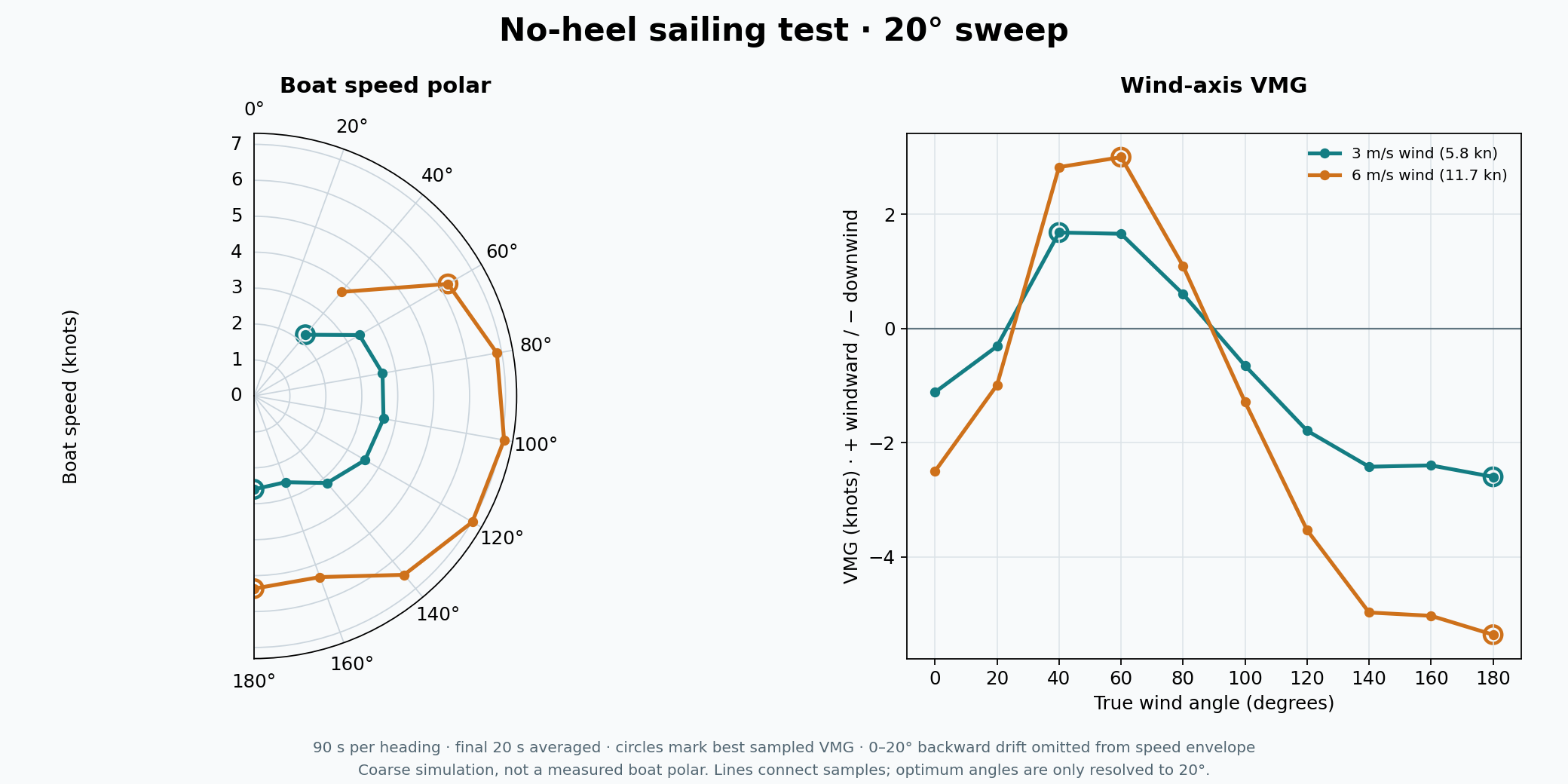
Two true wind speeds, sampled every 20°. The angle is measured from the bow to where the wind comes from: 0° head-to-wind, 180° dead downwind. Sail angle of attack is calculated separately from local apparent wind.
What was tuned
Forward resistance now includes an 8 N/(m/s)² speed-squared term, alongside the existing low-speed resistance. The centerline mainsheet is eased progressively from 0° to 80° for broader wind angles. Outhaul stays at 80%. Lift and drag still use the supplied coefficient chart. No target boat-speed values are imposed.
Actual Box3D runs: 4 × 6 sail grid, 90 simulated seconds per heading, average over the final 20 seconds. Heading, roll and pitch remain locked. These are approximate test-sled results; there is no buoyancy or validated hull resistance model. The schedule is a first trim pass, not an exhaustive optimization.
Measured results
VMG includes sideways slip: velocity dotted with the true wind-from direction. Positive is windward; negative is downwind. Shaded rows are backward drift, retained in the table but excluded from the forward-sailing envelope. Δ speed compares the last two 10-second averages.
| Wind | True wind angle | Mainsheet | Boat speed | Windward VMG | Sideways speed | Δ speed |
|---|
Data & method
Download CSVSimulation dataVector plotPNG plot
Wind-angle and VMG conventions: ORC Speed Guide explanation. The supplied reference shows another boat and wind range; its exact speeds are not calibration targets for this rig.